
Flexible hose & connector fixes, $100–$200
The brittle connector behind the cooktop, small part, common leak source, quick fix.
There is no "close enough" in gas. Every job we do in Blacktown, a leak chased down, a cooktop connected, a new line run to an outdoor kitchen: finishes the same way: holding pressure on a gauge, certified, documented. That is the whole standard, and it is not negotiable.
In NSW, every job on a gas installation: connecting a cooktop, moving a bayonet, repairing a line: must legally be done by a licensed gasfitter, and for good reason: the failure modes are leaks, fires and carbon monoxide, none of which give second chances. It is also why "the handyman hooked it up" appliances are the single most common source of the leaks we get called to.
Licensed does not just mean allowed. It means the job finishes with a manometer pressure test proving the whole installation holds, appliances checked for correct operation and ventilation, and work done to AS/NZS 5601, the standard that decides what your insurer thinks of the installation if anything ever goes wrong. Across Blacktown and the Western Sydney, that is the finish line on every gas job we do.


The most common gas work in a newer home is not repair, it is extension, a barbecue point, an outdoor kitchen, a fire pit, a pool heater added a year or two after moving in.
In Blacktown’s newer subdivisions, grout, sand and construction waste washed into fresh pipework often settle and block drains within the first few years.
The thing worth checking first is whether the existing supply and meter can carry the extra load. Adding appliances to a system sized exactly for the original build is how people end up with everything working individually and nothing working together.
Within the defects period, gas faults arising from installation are the builder's responsibility, and having someone else work on it can complicate that.
We will say when a fault looks like a handover defect rather than start work on it, even though that sends you back to the builder. Documenting what we found is more useful to you than an invoice from us.
A recently built home should have a compliant gas installation and usually does. The faults we find are workmanship rather than age: a joint not fully made up, a fitting left slightly loose, an appliance commissioned in a hurry at handover.
Those show up early. If a new home has a gas smell, an appliance that will not stay alight, or a burner running yellow, it is worth a test while it is still the builder's problem.
Gasfitting is licensed work in NSW and there is no handyman tier of it. It is not bureaucratic caution, unburnt gas and incorrectly burnt gas are both lethal, and the second one is odourless.
It also has consequences beyond safety. Unlicensed gas work voids home insurance, invalidates appliance warranties, and surfaces during a sale. Every job here is done under licence and finishes with a certificate.
A gas leak is an urgent repair under NSW residential tenancy law, and landlords are obliged to arrange it promptly. If you smell gas, ring 131 909 first and the agent second, the network operator does not wait for anyone's authorisation.
Landlords are also responsible for ensuring appliances are safe. If a heater in a rental has never been serviced and burns yellow, that is a request worth putting in writing rather than living with.
An appliance service is combustion analysis, not a clean. The technician measures what is coming out of the flue, checks the burner and heat exchanger, verifies ventilation and confirms the safety devices work.
Manufacturers generally specify every two years for heaters and annually for anything unflued. Very few households do it, and it is the single most effective thing you can do about a risk you cannot smell.
The brittle connector behind the cooktop, small part, common leak source, quick fix.
Leaks at threads, valves and joints: found, sealed properly, retested under pressure.
Corroded or damaged runs cut out and replaced. Concealed lines needing access run $800–$2,500.
Cooktop, oven or heater connected, tested and certified. More if a new line or bayonet has to be run to reach it.
The going Sydney range for licensed gas work in 2026, with call-out fees typically $80–$150.
No gas job of ours ends without holding pressure on a gauge, that is the receipt that matters. Figures here are indicative of the 2026 Sydney market rather than a quote from us, you get your own number as a fixed price before any work starts.
Suspected leaks start with isolation at the meter and ventilation. Diagnosing a system still feeding its own leak is how amateurs get hurt.
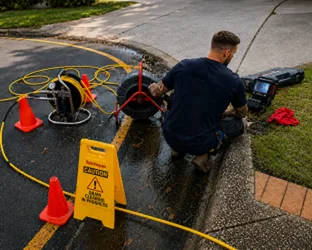
A manometer proves whether the installation loses pressure; detection fluid and instruments then walk it back to the guilty joint or run.

The failed piece is replaced with compliant material to AS/NZS 5601, one connector or a full rerun, never sealant and optimism.
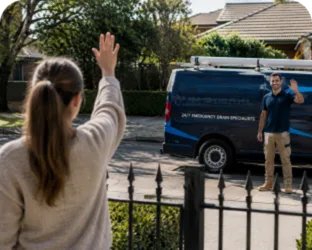
The whole installation holds on the gauge, appliances relight to clean blue flames, ventilation checks out, and the compliance record is yours.
New cooktop in its box, a bayonet that needs moving, or a smell you are not sure about: call and it gets done properly.
Licensed, pressure-tested, documented: every time. Smelling gas this minute? 131 909 from outside comes first.

Leave your details and our local Blacktown team will call you back fast.