
Attendance, $80–$180
The Sydney-standard call-out fee. We name ours on the phone before you commit to anything, hold anyone who won’t to that standard.
Some plumbing waits politely for a weekday. The rest, water through a light fitting, sewage in the shower, a whiff of gas: needs someone now. Our Blacktown line is answered by a licensed plumber around the clock, and the first thing you get is help, not a hold queue.
Here is the test we give callers: is it spreading? Water spreading through a ceiling, waste rising in a floor drain, gas reaching more of the house: spreading problems are emergencies, because every hour of waiting is added to the repair bill. Static problems, a drip into a bucket, a slow drain with a second bathroom available, can usually sleep until daylight rates. Tell us what you see and we will sort it into the right column honestly.
The other half of the job happens before we arrive. Whoever answers your call talks you through the shut-off that stops the damage, the meter valve for water, the cylinder valve for a failing tank, evacuation and 131 909 for gas, so by the time the van reaches Blacktown, Seven Hills, Doonside, Kings Langley or anywhere across the Western Sydney, the situation is stable and the repair can start instead of the triage.


The single most common emergency in a new estate is not a plumbing failure at all, it is building material that went into the line during construction and has been gradually collecting waste around it ever since.
In Blacktown’s newer subdivisions, grout, sand and construction waste washed into fresh pipework often settle and block drains within the first few years.
Sand, mortar, grout and offcuts do not flush. They settle at the first low point and narrow the line until an ordinary night's use finally closes it. One proper clear usually ends it permanently, which is why it is worth doing thoroughly the first time.
Blacktown (postcode 2148) sits at the heart of Western Sydney, ringed by Seven Hills, Doonside, Marayong and Kings Langley. With sprawling postwar estates and busy new subdivisions, its drains cop everything from tree roots to builder debris, and we know the ground here.
On sloping ground the problem is rarely where the symptom is. Water leaves a failure at the highest point and surfaces at the lowest, which can be several properties away and well downhill of anything you would think to look at.
It is also why a neighbour's overflowing gully is sometimes your blocked line, and occasionally the reverse. We work uphill from the symptom rather than digging where the water appears.
Most homes around Blacktown have an overflow gully outside, a low grate, often near the back step, that nobody thinks about until it matters. It is deliberately set below the lowest fixture indoors so that when the line blocks, it spills into the garden instead of through your floor.
Flat, low-lying pockets and shallow stormwater lines struggle in heavy Western Sydney downpours, backing up gullies and flooding yards and driveways.
So a gully running in heavy rain is not a fault. It is the system doing its job and telling you the line downstream of it has stopped taking water. That is the moment to call, not after it reaches the hallway.
On a newer home this question is worth asking before anyone starts work, because the answer can be worth thousands. Defects in workmanship are typically covered for a period after completion; blockages from ordinary use are not.
What settles it is evidence. We record what the camera shows and describe the fault in terms a builder or insurer can act on, a displaced joint, a fall out of tolerance, debris from construction. You may still choose to have us fix it tonight; the documentation is what lets you recover the cost afterwards.
A yard that floods in every serious downpour is a different problem from one that flooded once in a freak storm. The first is a blocked or undersized line and it will keep happening; the second is weather.
Telling them apart takes a camera on a dry day, not a guess in the rain. If it has happened twice, book the inspection between storms, clearing a surcharging pit at the height of it costs more and tells you less.
An emergency fix that waits for a supplier is not an emergency fix. The vans carry the failure parts this work actually produces, pipe and fittings across the common sizes and eras, valves, flexible hoses, tempering and relief valves, drain machines and a camera.
It is why most call-outs finish on the first visit rather than being made safe and revisited. Where a part genuinely is not on board, you will hear that on the night along with what it changes.
The Sydney-standard call-out fee. We name ours on the phone before you commit to anything, hold anyone who won’t to that standard.
Business hours runs roughly $120–$160; after-hours sits higher because a licensed plumber is out of bed for you.
Call-out plus early labour plus minor parts covers the bulk of real after-hours jobs: bursts, blockages, failed valves.
Under-slab leaks, gas line faults, anything opening walls in the small hours. The number is agreed with you first, always.
Contained, isolated, water off? We will tell you it can wait and book daylight rates. Honesty is cheaper than urgency.
No number is invented after the fact, you approve the price before work starts, 2pm or 2am. Figures here are indicative of the 2026 Sydney market rather than a quote from us, you get your own number as a fixed price before any work starts.
The person answering can actually help: what to shut off, whether it truly needs tonight, and a straight ETA for Blacktown.
Emergency vans carry the usual suspects, pipe, valves, hoses, drain machines, because a fix that waits for a supplier is not an emergency fix.
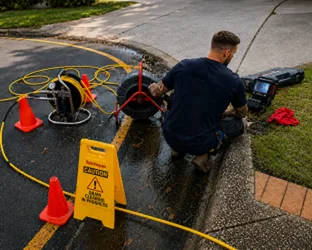
Damage stops first. Then the repair is priced, fixed, and you say yes or no with the number in front of you.

Almost always completed on the spot. Where a genuine part order is unavoidable, you are left sealed, safe and running until it arrives.
Call and describe it. If it can hold, we will tell you, and book you at daytime rates. If it cannot, you will be glad you rang tonight.
Call for the fastest response, any hour. Or send the form, after-hours enquiries get a callback from the on-call plumber, not an inbox.

Leave your details and our local Blacktown team will call you back fast.